In our third conversation with Giordano Cioni, formerly known as Gøneja, it became clear, looking back at our previous interviews, how each one captured a different moment in the evolution of his practice. I would also point out the urge to express oneself through and within different materials is apparent. There is something particularly rewarding about stepping back and seeing the larger trajectory of an artist’s work, recognizing how ideas mature, return and gradually unfold over time, culminating, for now, in ÆON. Rather than representing a break with his earlier work, his latest creations mark a deepening of it. In continuing to weave together sculpture, photography, film and mythology, Giordano has developed an increasingly cohesive artistic language that merges the material and the spiritual, something quintessential for making good art in our view! In his recent solo exhibition at OKK/Organ Kritischer Kunst Giordano expanded these long-standing themes through the lens of the Aquarian archetype, expansion Galore! The Viewers were presented with a rich dialogue between the earthly and the cosmic, transformation and continuity. While first reading a through his answers my scribbled notes included: “Cosmic Babies”, “Aquatic/Astral:Abyssic/Aerial”, “Terra Incongnita..is it really?” – do with that what you will while exploring the Age of Aquarius through Giordano’s lens. Enjoy the Trip!
At the Threshold of Aquarius
With ÆON, you’re turning toward Aquarius, the Water-Bearer, and this whole idea of shifting astrological aeons. Can you dive into this a bit and how it materialized in your work and process first?
I have been reading about the Precession of the Equinoxes and the current shift from the Aeon of Pisces to that of Aquarius for quite some time, many esoteric authors have placed great emphasis on the transformations these astronomical passages are believed to mark on Earth. As I began this body of work, my practice was in need of a paradigm change; photography as a primary medium could no longer fully articulate my ideas and I needed to push my sculptural language beyond the primitive forms and materials I had up until then explored. Conceptually too, my research had become increasingly heavy and I felt the need for some rejuvenation.
This is where Aquarius entered the picture.
The archetype’s Uranian impulse towards experimentation felt like the perfect ally to venture into unfamiliar territories like film, which had been among my ambitions for a while, as well as more sophisticated sculptural techniques and materials like figurative modelling and resin casting. Exploring Aquarius through the lens of the current precessional transition also felt like an uplifting mythology to investigate; a way to respond to the present-day global upheaval by imagining post-capitalist narratives of collective change.
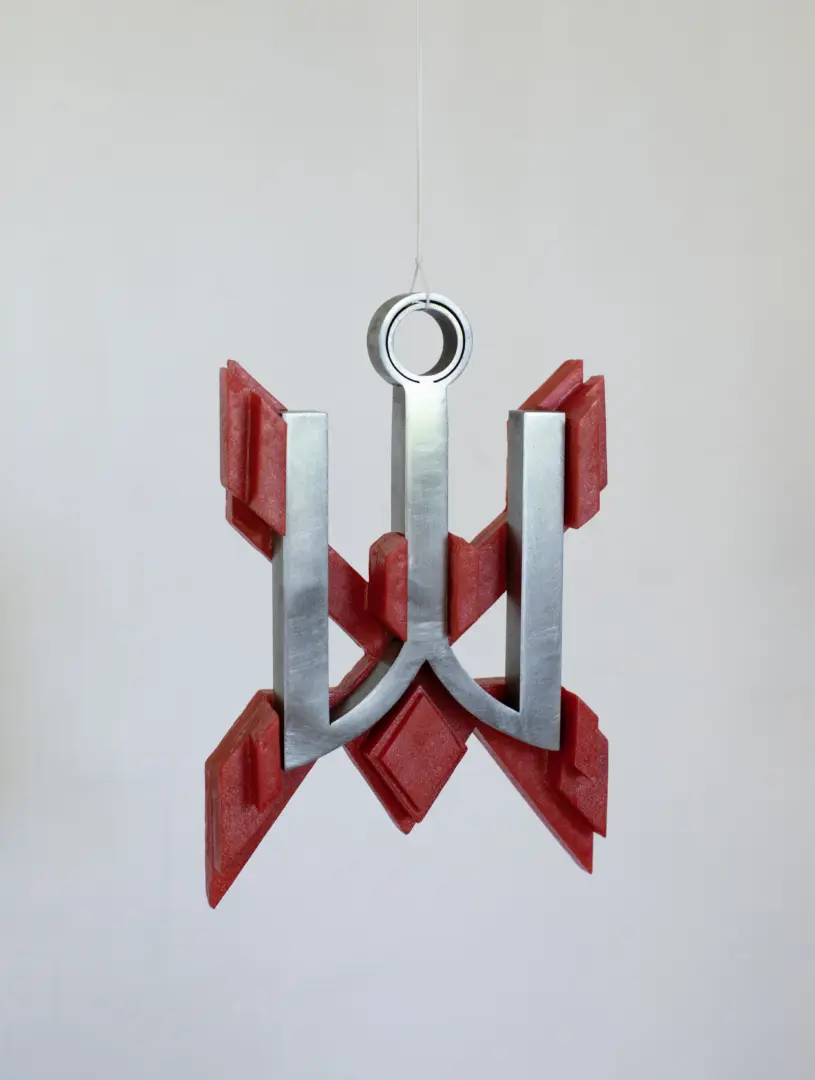
In Secret Network, for example, I explored mycelium as a metaphor for the Aquarian decentralised and horizontal mind.
This hidden root system moves beneath the soil, redistributing nutrients not only between fungi but also across different species, sustaining much of the plant life on Earth. The mycelial steel sigil at the centre of the sculpture, with its concentric circles, is attached to a hieroglyphic resin body symbolising the correspondence between astral and earthly forces: as with the Aquarian impulse towards collectivity above, so too with the subterranean distribution of resources below.
Where Myth meets Matter
You describe the exhibition as reflecting changing paradigms and a kind of mythological renewal. What kind of shift are you sensing right now, in yourself or/and collectively?
For the collective psyche, the Age of Pisces was a deeply polarised era. In the night sky, this constellation appears formed by two fish figures moving in different directions: one pointing upward, towards spirit, the other sideways, towards matter. Christianity, which was the dominant religion on Earth during this whole aeon, echoed this division through the Christ / Antichrist dichotomy; the saviour on the one side, the corrupter on the other. Spiritual salvation was promised by repressing or disidentifying from our lower, carnal impulses, as opposed to integrating them. Body and spirit were not understood in continuity, as if only the latter dimension could redeem us from our corruptible, material condition.
In Aion, Jung explains this psychic split with the process of relegating Shadow-content into the subconscious while over-identifying solely with the conscious Ego.
Over time, this polarisation became a source of both collective and individual neurosis.
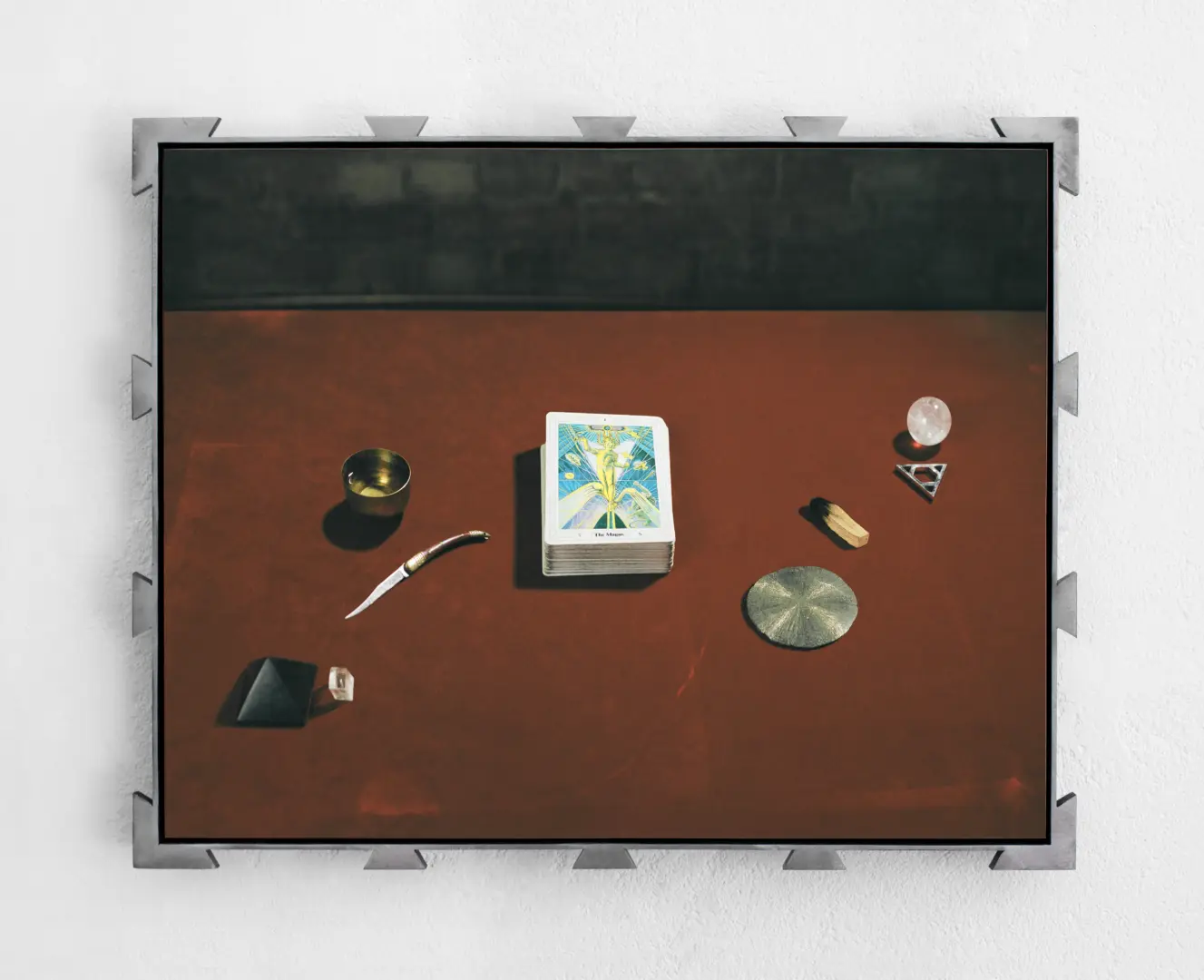
The Magus, 2025, inkjet print on alu plate in artist’s steel frame, 45 x 56 x 4 cm
With Aquarius, what was once separated seems once again in search of its lost unity, in line with the archetype’s capacity to transcend dualities. The Water-Bearer thus becomes a symbol of containment and reconciliation. I sense this shift in the growing attempt to reintegrate forms of experience and knowledge that had been marginalised, repressed or cast into shadow during the Piscean Aeon of Christianity.
Queer, indigenous and neurodivergent perspectives, alongside feminist theories and anti-colonial histories are all contributing to this wider psychological realignment.
I explored this viewpoint in the work Transsexual Aquarius, where I sculpted the archetype figuratively in the body of a blue, cosmic-looking trans woman. This figure becomes a symbolic attempt to reconcile the tension of dualities – spirit and matter, masculine and feminine, identity and transformation – within a harmonious physical resolution.

Transsexual Aquarius, 2026, epoxy resin, pigment, aluminum powder, steel, 54 x 22 x 35 cm
Embodying Estrella
It feels to me personally nearly like a homecoming to dive into the density and pureness of your works in nature. Looking at Estrella in particular, it feels like an opening of some kind. Can you tell us more about this?
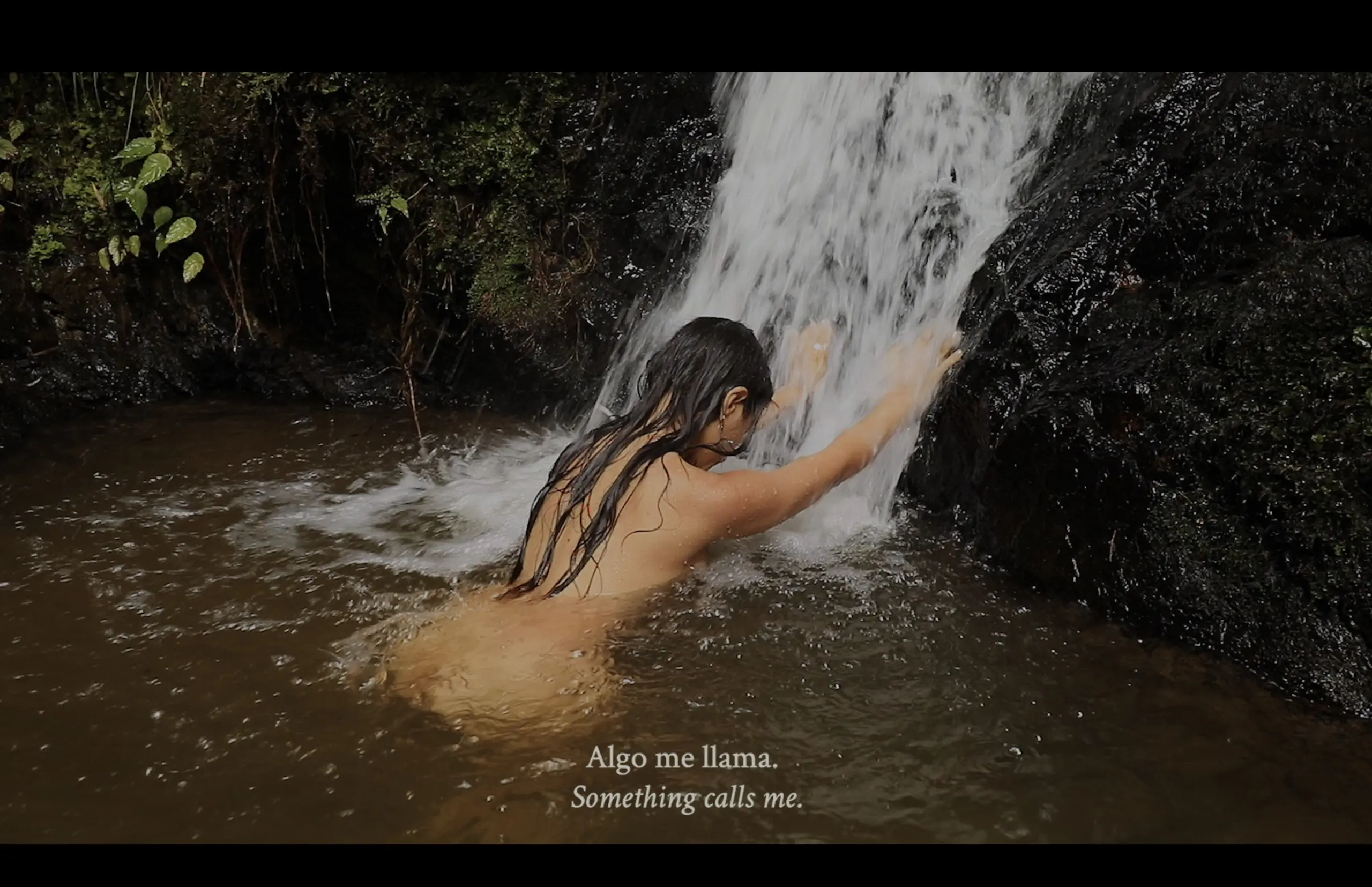
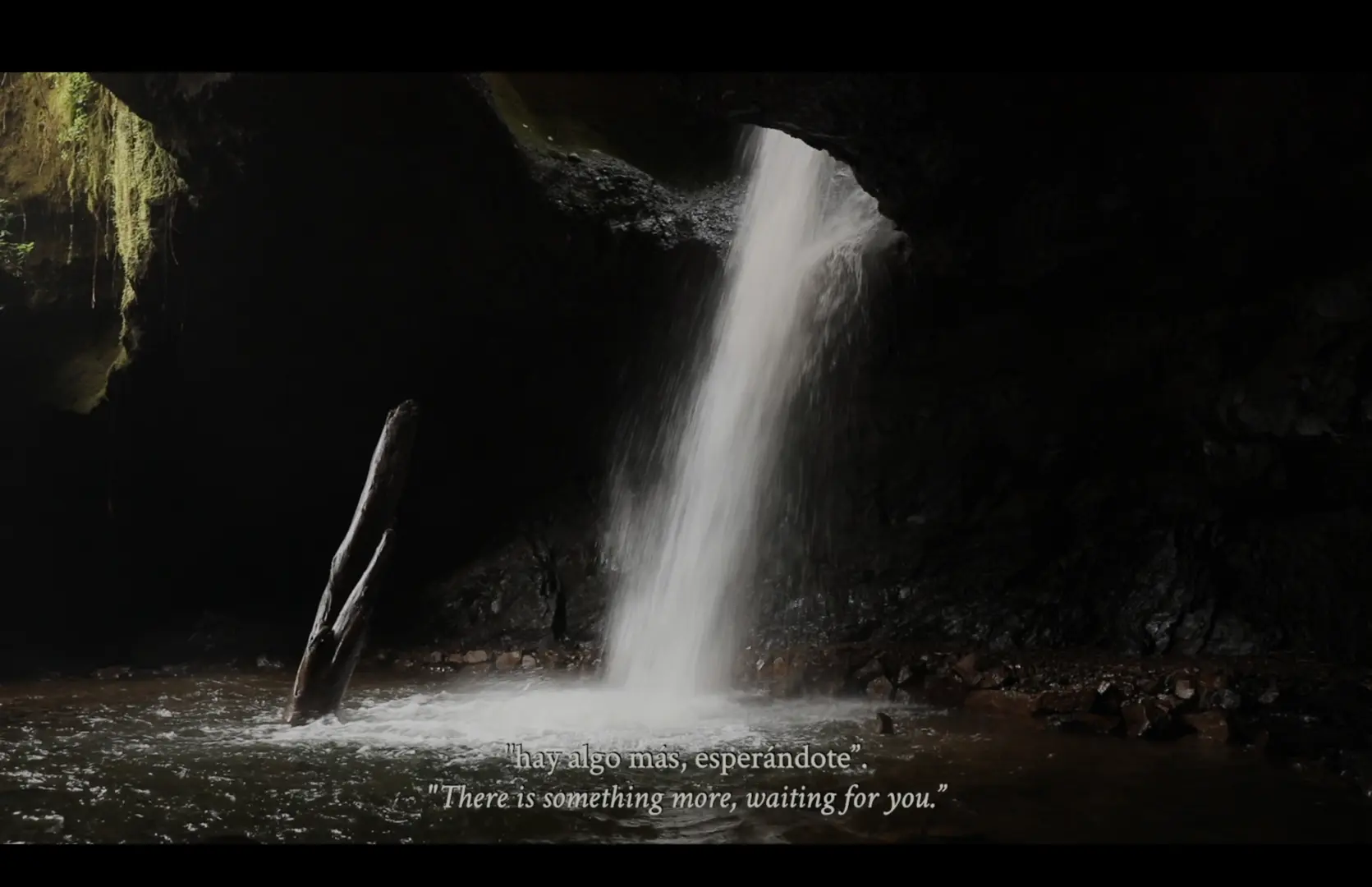
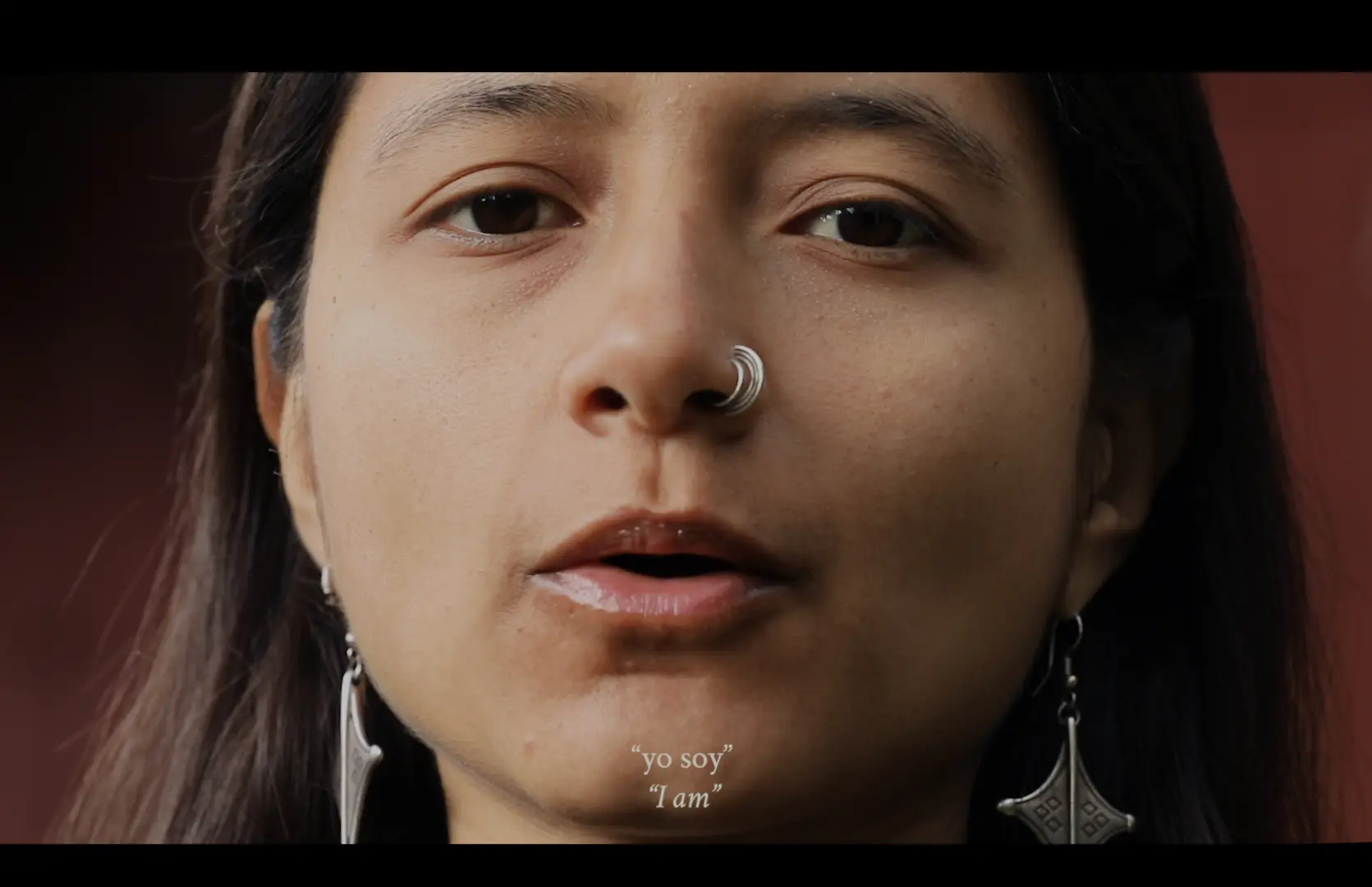
In the film Estrella I wanted to explore the Kabbalistic correspondence between Aquarius and Tarot’s Arcana XVII, The Star, which occupies the path connecting Netzach and Yesod on the Tree of Life, linking emotional experience with the subconscious and imaginal realm. In the Rider-Waite Tarot, this archetype is depicted as a young woman bathing naked beneath a starry sky, pouring water from a vessel back into a lake.
It embodies a state of consciousness of pure transcendence, where the self ceases to be confined by individuality and begins to participate in a larger cosmic project.
I became interested in this archetype as a symbol of openness towards the greater forces that shape us and connect us to the wider cosmos.
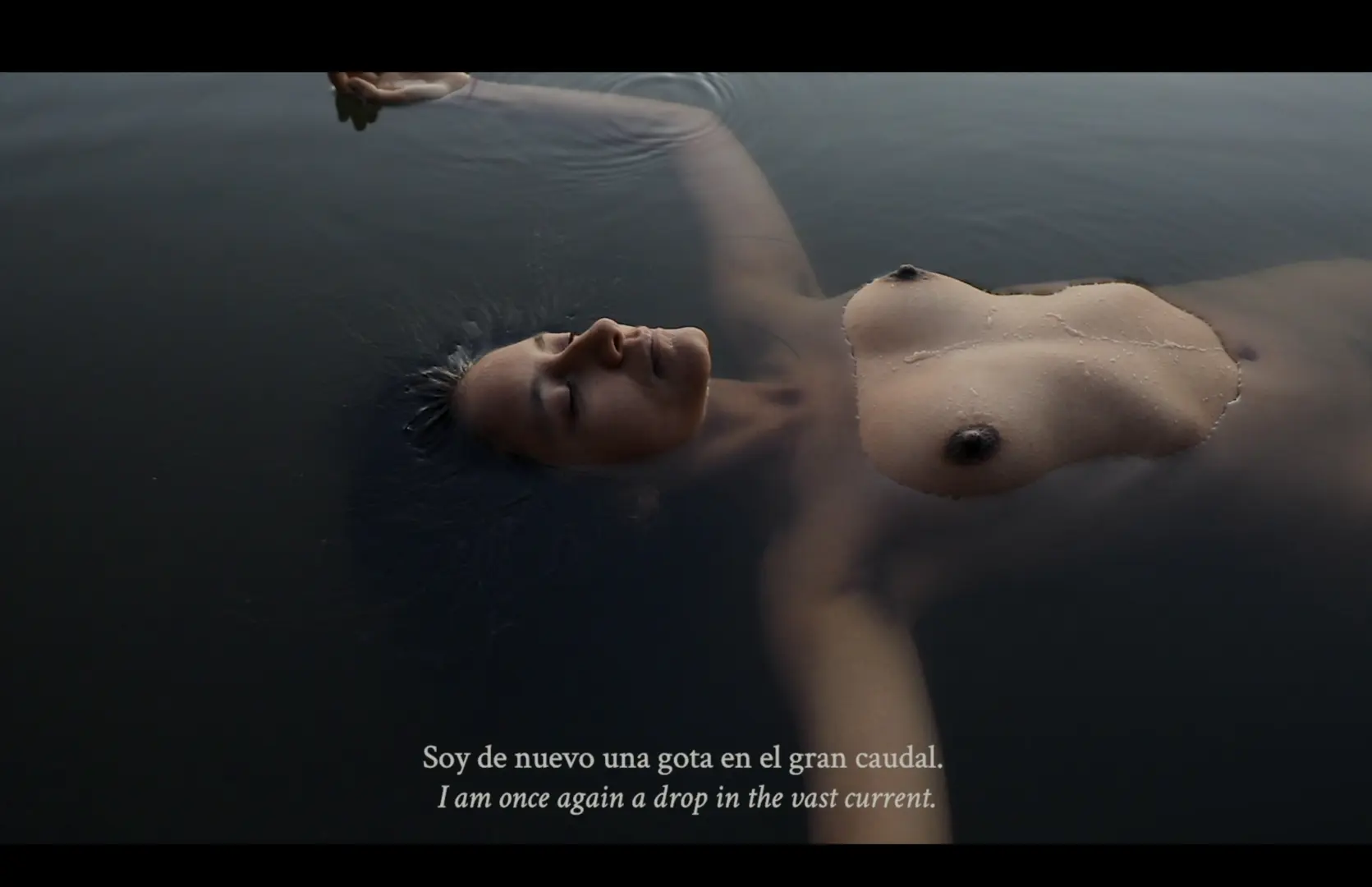
Estrella, 2025, film stills
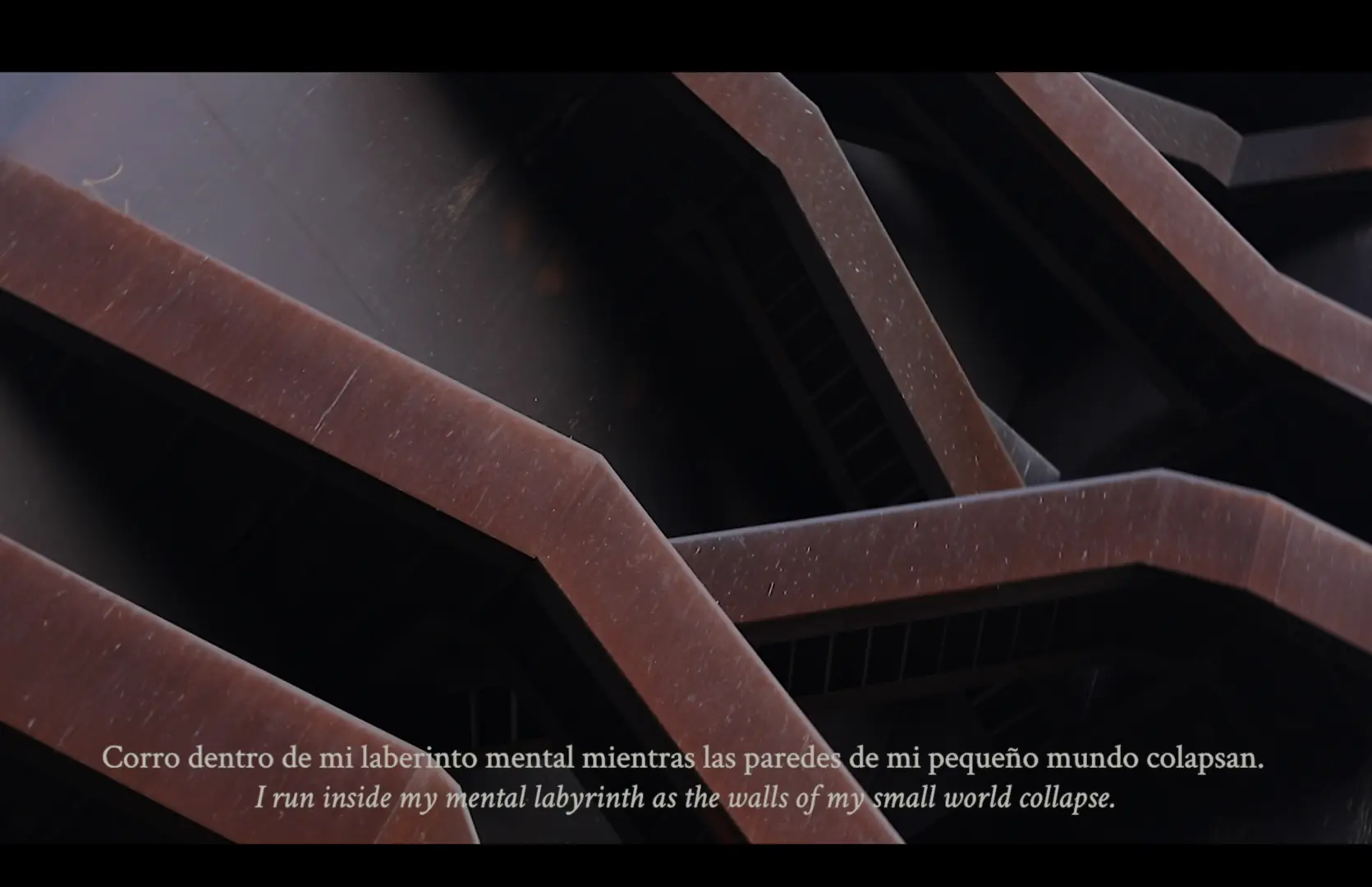
The emphasis placed on aquatic and astral landscapes is therefore not intended as a romantic depiction of nature, but rather as a representation of the living systems within which the subject decentralises itself and becomes an active participant in the whole. This transition is further amplified by the previous chapter of the film, inspired by Arcana XVI, The Tower, which is associated with Mars and the collapse of rigid structures. If that chapter was explored through rusted steel architectures and industrial landscapes, nature later becomes the threshold towards a renewed permeability.
The Star opens what The Tower has destroyed; crisis becomes the condition that makes this form of cosmic participation possible.
You’re returning with this work to OKK, a space that has clearly been part of your journey in Berlin. What does it mean to bring ÆON there now?
The making of ÆON required a high degree of research and experimentation. There are only ten works in the exhibition, yet each investigates a different facet of the Aquarian mythology I set out to explore. The exhibition also involved multiple materials and media, many of which I had never worked with before.
All of this demanded a slow process of imagination, learning and production.
Commercial galleries, bound to the market needs of speed, productivity and visibility are rarely the type of infrastructure willing to invest in this type of approach. This goes alongside a cultural sector in Germany whose funding, together with that of other social areas, has been heavily mutilated to mobilise billions in re-militarisation.
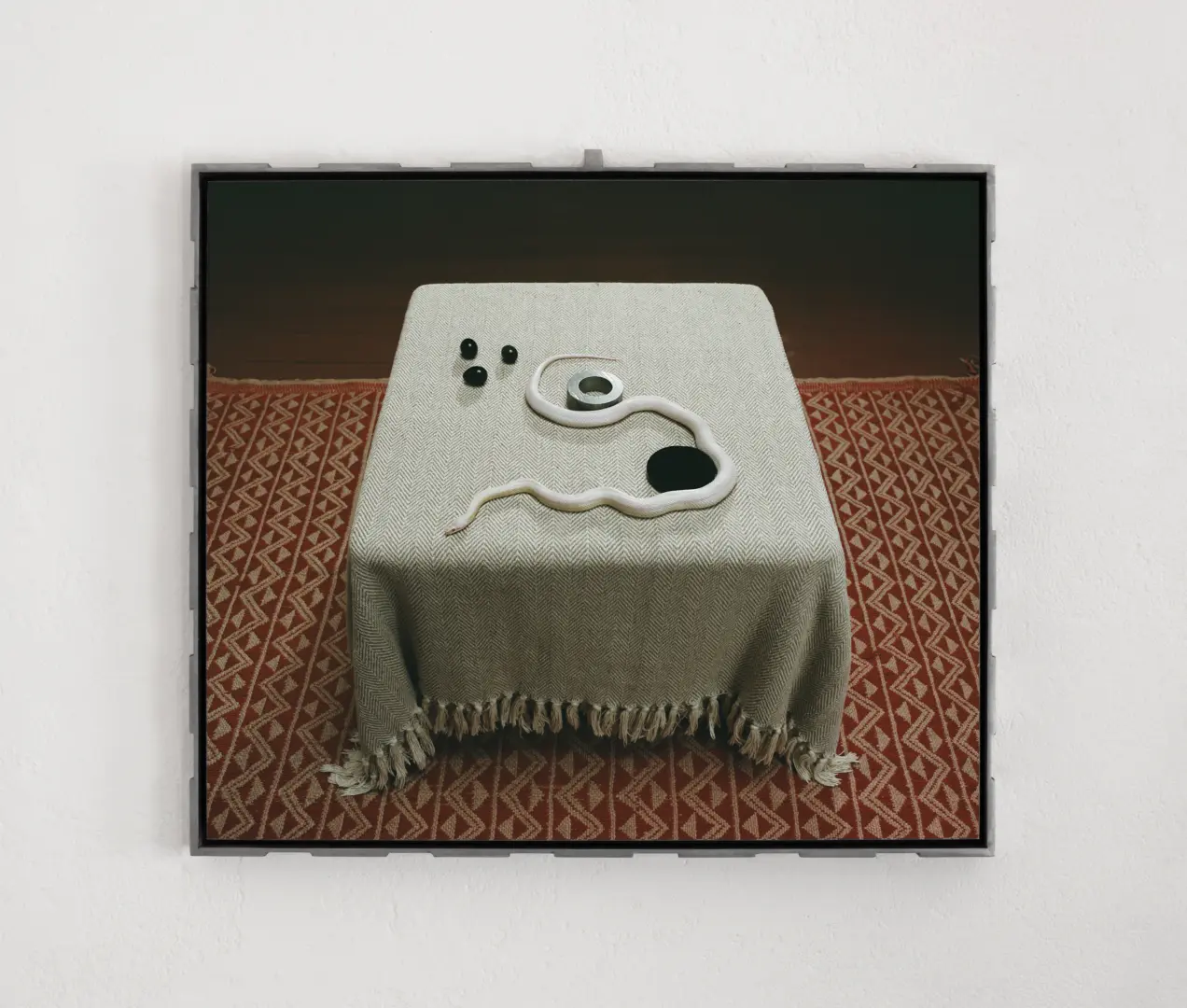
Obsidian, 2024, inkjet print on plate in artist’s steel frame, 45 x 53 x 3 cm
This is one of the reasons I am happy that places like Organ Kritischer Kunst still exist within Berlin’s cultural landscape. Their programme continues to present genuinely anti-conformist and imaginative exhibitions, from the Mycologica group shows inspired by the mesmerising world of fungi to the bold performance nights of Encuentro Latinoamericano. There is a freedom to the programme and willingness to support urgent and unpolished forms of research as a core of their activity. At the same time, it is important not to romanticise the situation.
Exhibitions like ÆON and spaces like OKK remain possible largely through the unfunded labour, commitment and persistence of the people behind them.
Their existence depends on conditions that are increasingly fragile, yet they continue to create room for forms of imagination that might otherwise disappear.
Sigils seem to reappear throughout your work in different forms and over the years. What is it about these symbolic forms that continues to fascinate you?
My enduring fascination for sigils stems from their ability to carry enormous archetypal weight through the most primal of forms. While these symbols are often constructed by simple lines, circles, and other elemental shapes they can contain entire cosmological and symbolic systems condensed into essential visual structures. Although their roots are ancient, this tradition has been continually renewed as many contemporary practitioners have developed techniques for creating new sigils rather than relying solely on those codified by religious or magical traditions.
Sculpture gradually became the ideal medium for me to give these symbols a body.
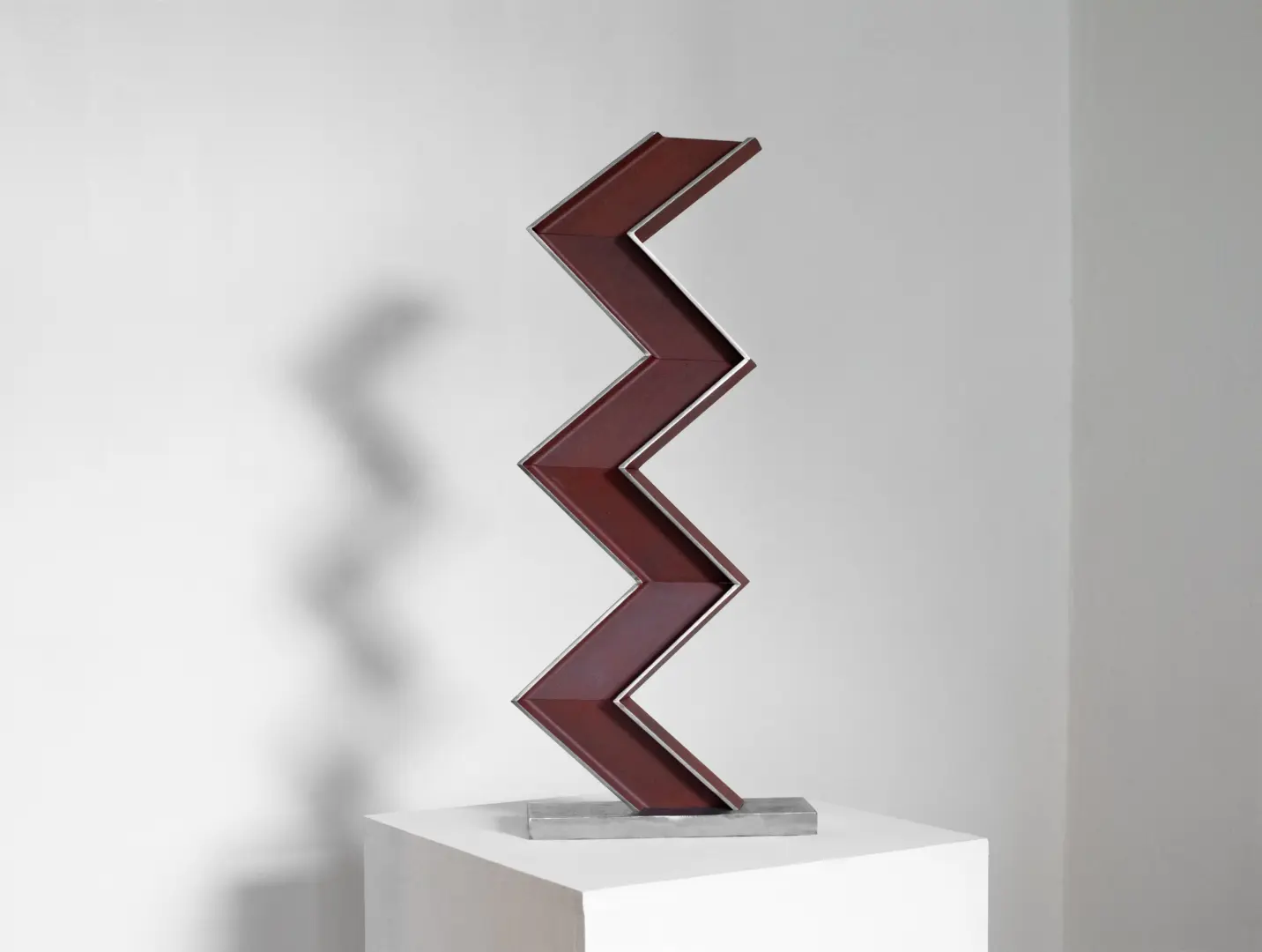
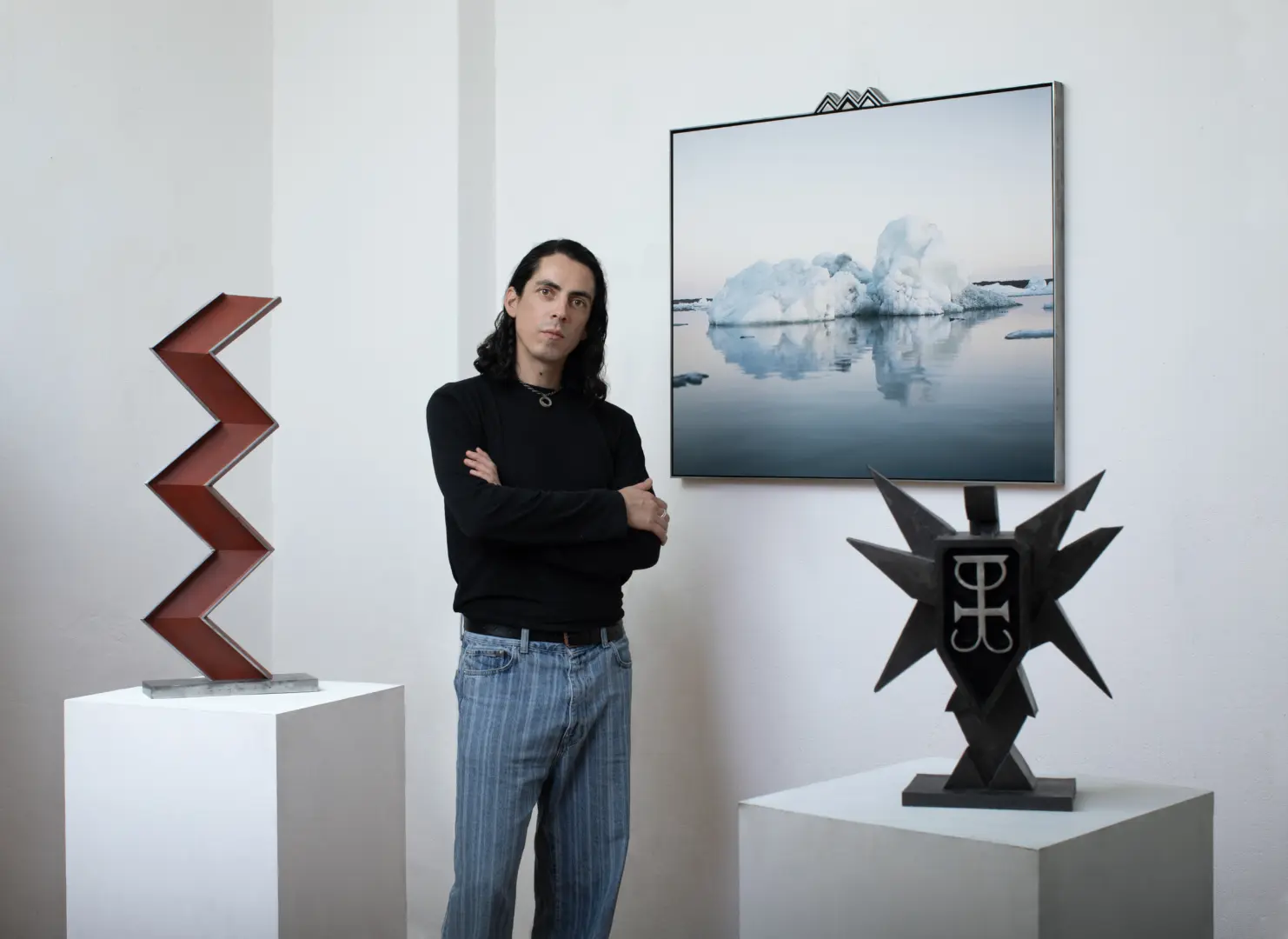
Dialectic, 2025, coated steel, acrylic, 77 x 31 x 10 cm
In ÆON I took this approach a step further with Dialectic. I returned to the Aquarius glyph itself: two simple zigzag lines one above the other, representing the currents of water and I began to ask what tensions might be embedded within such simple form. To do that, I investigated its planetary rulers, Saturn and Uranus, and the complex dynamics they negotiate. In astrology, Uranus is understood as an activating impulse, a rapture of inspiration that crystallises the visionary qualities of Aquarius, while Saturn concerns itself with structure, limitation and discipline, giving permanence to Aquarian ideals. Despite their radically different natures, I increasingly came to see these forces as two sides of the same coin.
Vision without structure remains potential; structure without vision becomes control and stagnation.
Aquarius thrives when both work together. Dialectic attempts to give physical form to this tension at the heart of the Aquarian spirit. It retains the Saturnian stability of a totemic structure, while its ninety-degree rotation and the subtle bends in its lines introduce a sense of dynamism that recalls the electric force of Uranian inspiration.
Ephemeral Forces
The work Jökulsárlón really stayed with me, clearly because since participating in the Arctic Circle residency I think about the Arctic daily and when and how to go back. Can you tell me about the place and context of that photograph and your journey, the impact it had on your spiritually especially?
This work was produced during the initial research for ÆON in Spring 2024, while I was spending a month in South Iceland for an artistic residency at Hafnarborg Museum. While landscape was already an integral part of my practice, up until that moment I had mostly explored it through obscure ruins and desolate structures sitting silently on the land.
With this work, however, I wanted to encounter nature as an autonomous archetypal force.
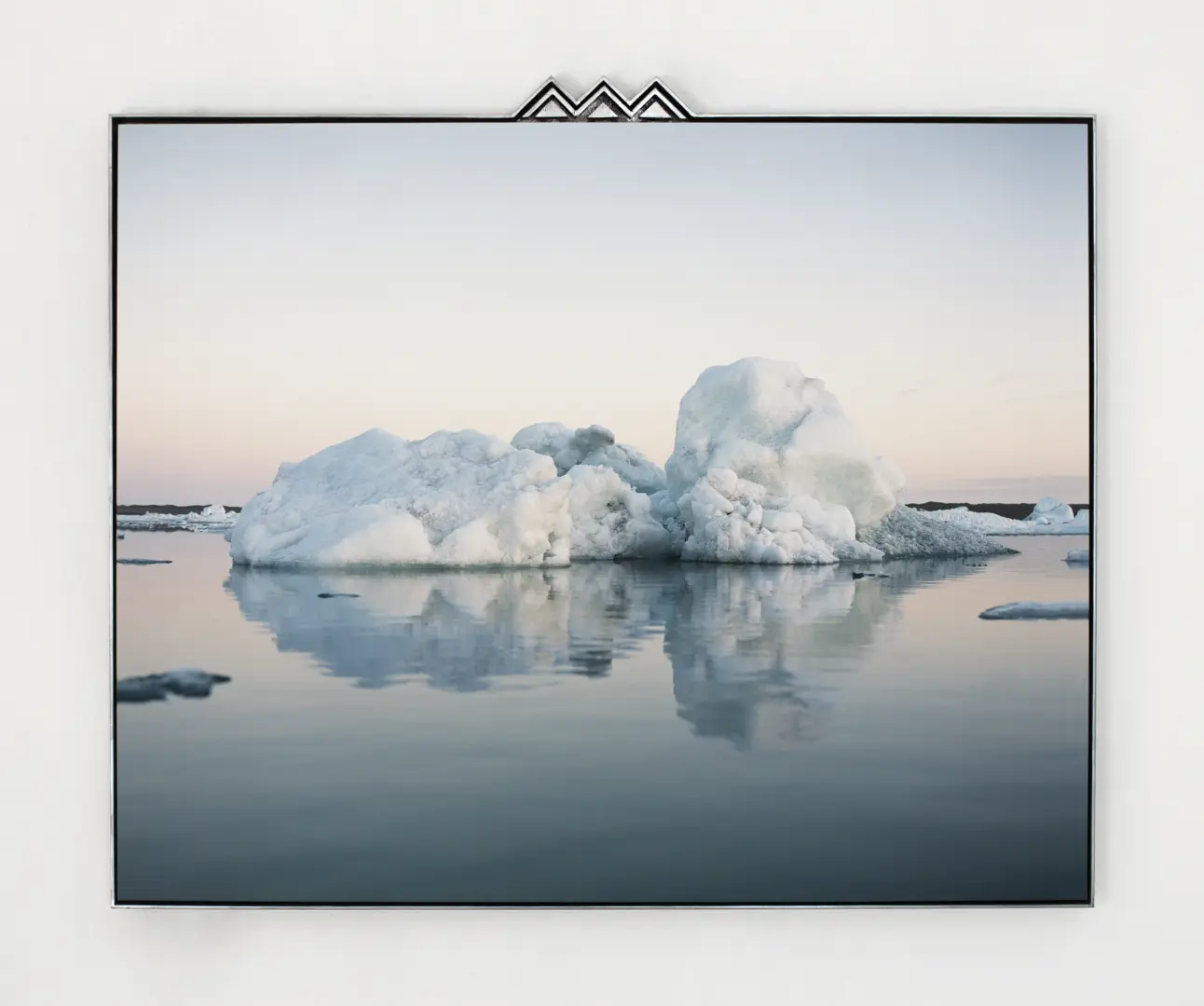
Jökulsárlón, 2024, inkjet print on plate in artist’s steel frame, 81 x 103 x 4 cm
I felt there could be no better place to engage with the elemental force of water than Jökulsárlón, a vast lagoon attached to a glacier and connected to the sea on the opposite side. Huge pieces of ice break away from the glacier and float on the dark surface of the lake, making it one of the most primordial and mystical places I have ever experienced. In resonance with Aquarius, I wanted to capture these floating icebergs as water-carriers, ephemeral objects that carry the essence and fragile memory of water. To photograph them, I dragged a kayak into the lagoon and, armed with a Mamiya camera, I paddled my way towards its furthest edges.
It was one of the most intimate and frightening encounters with nature I have ever experienced, and the first time that, in order to make an image, I had to be fully inside a place rather than standing in front of it.
As the sun set and the light faded, the journey back was suddenly blessed by a pink Full Moon rising slowly from the opposite side of the lagoon, an image forever burned into my memory. A cathartic moment that made me feel disarmingly small, yet fully participant in a larger living whole. The photograph emerged from an encounter with a landscape that was alive, unpredictable and ultimately beyond my control.
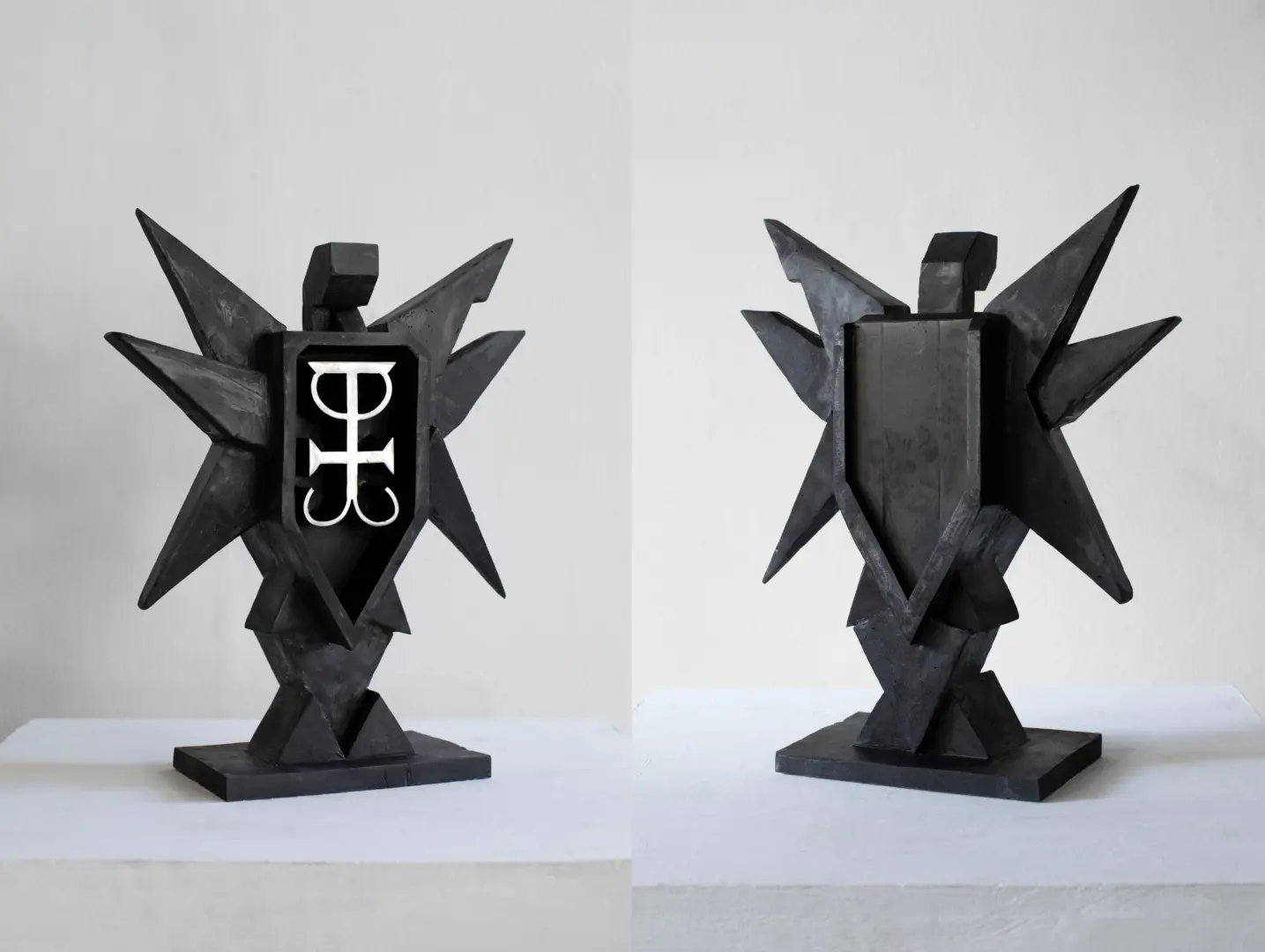
The One Who Uttered Truth Unto Power, 2025, epoxy resin, steel, iron oxide & aluminum powder, 39 x 31 x 12 cm
There is something elevating in ÆON, but also something disruptive. What tensions are you exploring through the exhibition?
Aquarius is often imagined as a harmonious archetype of collectivity and progress. Theories of the Age of Aquarius entered the collective imagination in the 1960s and 70s, when the Hippie movement saw in this dawning aeon an optimistic prophecy of global transformation grounded in harmony and freedom. Yet paradigm shifts are never gentle processes. Power structures never relinquish the conditions that sustain them. Late capitalism offers a particularly poignant example. Despite the acceleration of the planetary collapse at a speed and scale unknown to any previous generation, those in power fight to defend the paradigm that is dragging the whole world to oblivion.
Under such circumstances, any vision of the future that does not confront the structures that prevent it risks becoming delusional, detached or self-centred.
I explored this position in the The One Who Uttered Truth Unto Power where I looked at the less comforting face of Uranus, asking how its disruptive impulse might become useful during these times of crisis. I forged a small monad out of steel as a guardian of Aquarian vision. I then embedded it within a spiky armour of iron oxide and resin that holds its ground with a confrontational, ferocious presence. In a genocidal, life-destroying status quo, disruption became the response of a healthy nervous system that refuses participation through denial, apathy or despair. One of the lessons I took from this intimate encounter with the Water-Bearer is that hope becomes meaningful only if it sustains its contact with reality, no matter how difficult.
Any future we can envision must emerge from the ashes of the structures that jeopardise its existence.
Follow Giordano Cioni on Instagram
Conductor: Esther Harrison